
An explainer on the process of how NCERT textbooks are prepared, in light of a recent controversy over a class 8 textbook chapter on 'judicial corruption' that led to a Supreme Court ban.
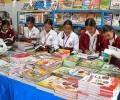
Delhi Police have arrested a Delhi University graduate and seized over 5,000 pirated NCERT textbooks from a godown in outer Delhi, dismantling a syndicate involved in the distribution of counterfeit educational material.

Union Education Minister Dharmendra Pradhan has expressed strong disapproval of a chapter in an NCERT Class 8 textbook addressing judicial corruption, prompting government action and a Supreme Court ban on the book's circulation.

Union Education Minister Dharmendra Pradhan on Wednesday said the Preamble to the Constitution is very well there in NCERT textbooks of Class VI as he refuted charges made in this regard by Congress president Mallikarjun Kharge.

The chapter, State and Society up to 1000 CE, says the Vedic period is 'often described as a period during which women held a high and respectful position in society'.

The apex court ordered that the Centre and state authorities comply with its directions immediately, and warned of 'serious action' if directions are defied in any form.

A new Class 9 NCERT textbook describes the judiciary as an "impartial and independent institution" that safeguards citizens' rights and upholds the Constitution, contrasting with a previous Class 8 textbook that sparked controversy over its depiction of judicial corruption. The new textbook was prepared before the Class 8 controversy erupted.
A number of academicians as well as political scientists Yogendra Yadav and Suhas Palshikar, who were part of the textbook development committee of the NCERT, had asked the council to drop their names from textbooks over 'several substantive revisions of the original texts'.

Union Education Minister Pralhad Joshi announced that revised NCERT textbooks for classes 10 to 12 are being prepared in "mission mode," while textbooks for classes 1 to 9 under the new National Curriculum Framework have already been released. He emphasised NCERT's role in building a 'Viksit Bharat' and highlighted the need for curricula to evolve with AI advancements and the importance of India's young population as a global asset.

The NCERT's Class 9 Social Science textbook now includes the Special Intensive Revision (SIR) of electoral rolls, explaining its purpose to ensure accurate voter lists. The textbook also commends the Election Commission of India (ECI) for conducting impartial polls despite challenges, highlighting the scale and autonomy of India's electoral process.
The Supreme Court has modified its previous order regarding three academics involved in a controversial NCERT textbook chapter on corruption in the judiciary, allowing government bodies to make independent decisions about their association with the academics.
The NCERT's class 8 textbook is under scrutiny for its content on judicial corruption, potentially leading to its removal after government concerns and objections from the judiciary.
The National Council of Educational Research and Training has reconstituted the Textbook Development Team for class 11 and 12 political science with a mandate to integrate cultural rootedness, Indian knowledge systems and inclusion, with at least four of the members having direct or indirect links with the RSS.

Anjali Saikia's extraordinary act of breastfeeding an orphaned palm civet alongside her infant son in 2009 has been immortalised in a CBSE Class X English supplementary reader, 'Words and Expressions Part Two', inspiring students across India with a lesson on empathy and coexistence.
The NCERT Class 8 social science textbook has undergone significant revisions, including a tweaked narrative on the 1947 Partition, the inclusion of VD Savarkar's demand for Swaraj, and the removal of references to Adolf Hitler and Nazi ideology. These changes follow a Supreme Court intervention regarding controversial content on the judiciary.
IIT-Gandhinagar is reviewing Michel Danino's position as guest professor after the Supreme Court directed institutions to disassociate from him due to a controversy over a chapter on judicial corruption in a withdrawn NCERT textbook.
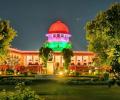
The Supreme Court has initiated suo motu action regarding an NCERT class 8 textbook that references corruption in the judiciary, raising concerns about potential defamation and the integrity of the judicial system.

The National Council of Educational Research and Training (NCERT) has altered the iconic 'Dancing Girl' figurine from Mohenjo-daro in its new Class 9 arts textbook, covering its bare torso with shading. This change has drawn criticism for misrepresenting the original artefact and sparking a debate on what is considered 'age-appropriate' in educational materials.

The new NCERT Class 9 mathematics textbook, 'Ganita Manjari', integrates ancient Indian mathematical systems and historical context, marking a shift from previous editions by emphasising indigenous contributions and linking concepts to ancient texts and scholars.

The NCERT has issued a public apology and withdrawn a social science textbook for Class 8 after the Supreme Court objected to a chapter on judicial corruption. The court imposed a ban on further publication of the book.

The NCERT has apologised for 'inappropriate content' in a Class 8 textbook chapter discussing judicial corruption, following Supreme Court criticism. The textbook will be rewritten, and its circulation has been put on hold.

How did hundreds of errors slip through multiple stages of drafting, editing, proofreading, expert review and final approval before making their way into classrooms?

A parliamentary panel flagged staffing shortages at NCERT and CBSE, inadequate education spending, falling enrolment and poor internet connectivity in government schools.
Michel Danino, one of the NCERT academics previously barred by the Supreme Court over a controversial chapter on the judiciary, maintains the content was 'correct' and defends its inclusion in the textbook.

The suggestions have been part of the final position paper on social sciences, which is a key perspective document that helps in the development of new NCERT textbooks on the subject. The proposal has yet to get a final nod from NCERT.

The NCERT has included in the class 9 social science textbook a section on Emergency, which it described as "one of the major challenges to democracy in India" with Education Minister Dharmendra Pradhan hailing the move saying future generations should know about the "dark deeds".
The Centre has directed the NCERT to review all textbooks after the Supreme Court raised concerns about 'offending' content on corruption in the judiciary in a Class 8 social science book.
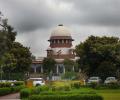
Three academics involved in drafting a controversial NCERT textbook chapter on corruption in the judiciary have approached the Supreme Court to defend their work, stating it was a collective effort and not the view of any single individual.

'Now that NCERT has received the status of a deemed university, it will start its own MA courses, postgraduate courses, and doctoral research in education, fully funded by the government.'
The change in the syllabus comes in the wake of the implementation of the National Curriculum Framework, which suggests that the textbooks should connect knowledge to real life situations.

The 19-member National Syllabus and Teaching Learning Material Committee (NSTC) will be headed by National Institute of Educational Planning and Administration (NIEPA) chancellor MC Pant and develop textbooks for classes 3 to 12.

Three National Testing Agency (NTA) subject experts, P V Kulkarni for chemistry, Manisha Sanjay Havaldar for physics and Manisha Gurunath Mandhare for botany and zoology, were the primary sources of the NEET paper leak, according to the Central Bureau of Investigation's chargesheet.

RSS leader Sunil Ambekar says history textbooks have been revised, with titles like 'the great' removed from historical figures like Akbar and Tipu Sultan. He highlights the importance of India's ancient knowledge and the need to understand its history.

'You have made a film which is rage bait so that more people will watch it and get incited.'
The National Council of Educational Research and Training (NCERT) has removed all references to the Mughals and Delhi Sultanate from its class 7 textbooks. The new textbooks, released this week, have been designed in line with the new National Education Policy (NEP) and the National Curriculum Framework for School Education (NCFSE) 2023, which emphasize incorporating Indian traditions, philosophies, knowledge systems, and local context into school education. The textbooks now include new chapters on ancient Indian dynasties, sacred geography, and government initiatives like Make in India and Beti Bachao, Beti Padhao. The revamp has been met with criticism from opposition parties who equate it with "saffronisation."

The NCERT has dropped references to the demand for a separate Sikh nation of Khalistan from the class 12 political science textbook following objections from the Shiromani Gurdwara Parbandhak Committee (SGPC), according to top education ministry officials.
The UGC chief said the NCERT is fully justified in carrying out rationalisation of its textbooks' contents.

Palshikar and Yadav, who were chief advisors for the original Political Science books for classes 9 to 12, said, "While the modifications have been justified in the name of rationalisation, we fail to see any pedagogic rationale at work here. We find that the text has been mutilated beyond recognition. There are innumerable and irrational cuts and large deletions without any attempts to fill the gaps created.

A controversy has erupted after an NCERT Class 8 textbook depicted present-day Rajasthan as part of the Maratha Empire, drawing criticism from royal families and political leaders who call the depiction factually incorrect and misleading.
More than 1,800 scientists, science teachers and educators have written an open letter raising concerns about the chapter on 'Theory of Biological Evolution' being dropped from the NCERT textbook for Class 10.
